
Tank Quit? Find Out Whether It Needs Replacing First
A lot of tankless calls start with a tank that just stopped making hot water. Before you plan a bigger project, find out what actually failed. A bad thermocouple, gas valve, or heating element is usually a repair, and if a repair will do it, that’s what I’ll recommend. Start with water heater repair and replacement if that’s where you are.
If the tank is leaking from the body, the steel has rusted through and nobody can patch it. You’re buying something either way, and that’s a good time to weigh tankless. So is a working tank you’re simply tired of running out of. That one you can plan on your schedule, not in a cold shower.
Five Things That Decide Whether Your House Is Ready for Tankless
Most houses can take a tankless heater. What varies is how much work it takes to get there, and that depends on your house, not the box the unit comes in.
- How much hot water you use at once. A tankless unit is sized by flow: how many gallons a minute it can heat. Count what runs at the same time on your busiest morning. Two showers and the dishwasher need a bigger unit than one shower and a sink. Winter matters too. The water coming into a Central Mass house is a lot colder in February than in August, so the unit has to work harder to bring it up to temperature. Size it for winter, or you’ll notice.
- Whether your gas supply can keep up. A gas tankless unit pulls a lot of gas all at once, and the pipe feeding your old tank may be too small. In Templeton, “gas” almost always means propane. Templeton isn’t on the state’s list of towns served by a natural gas utility, so the tank in your yard, its regulator, and the line to the house all have to keep up while the boiler, range, and dryer draw from them too. If your propane company owns the tank, they may need to be part of the plan. Over the line in Gardner or Westminster, where Unitil supplies natural gas, the question becomes whether the meter and service can deliver enough. Gas piping is part of my license, so if the line needs work, it’s part of the same job, not a second contractor.
"We hired him to convert our oil burner to gas, and he took care of everything from start to finish."
- Where the vent can leave the house. Tankless units vent out a side wall or up through the roof, not into the old chimney. The exit has to stay clear of windows, doors, and anywhere snow piles up. That last one matters here. A vent buried by a drift or a roof slide can shut the heater down, usually on the coldest night of the year.
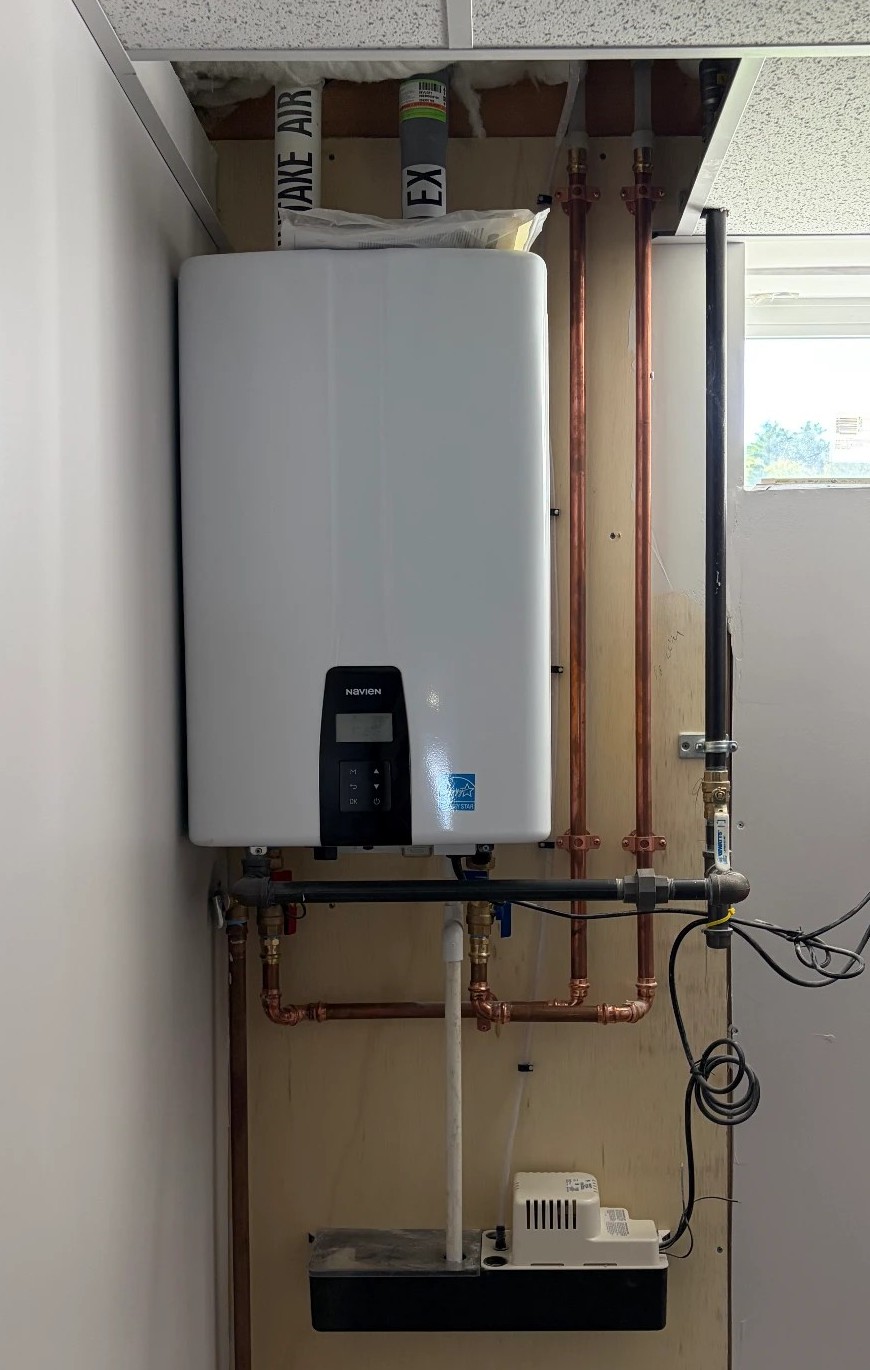
- Where the unit will hang. It mounts on a wall, so it needs solid wall space close to the gas, the water lines, and the vent route. A condensing unit also makes water while it runs. That water is acidic and needs a drain, often through a small neutralizer first. If the only open spot is an unheated corner of the basement or a garage, freezing becomes a risk you have to plan around.
- What’s in your water. A tankless heat exchanger has narrow passages, so what’s in the water matters more than it does in a tank. Templeton’s town water comes from four gravel-packed wells (Otter River, two on Maple Street, and Sawyer Street), and the town’s 2025 water quality report notes that hydrant flushing stirs up sediment that’s mostly iron compounds. That’s a good reason for an inlet screen you can clean and service valves you can flush through. Outside the town water system, a lot of homes around here are on private wells, where hard or iron-heavy water can leave scale inside the unit. Test first, then treat. Only what your water actually needs.
Thinking about electric instead? I don’t really recommend it here. The water in central Massachusetts is just too cold. Whole-house electric tankless units often draw more power than many older panels can carry. But whether yours can is an electrician’s call, not mine, and I’ll tell you who to call. One local wrinkle: Templeton homes buy power from Templeton Municipal Light & Water, not Eversource or National Grid, and the town utility runs its own rebate programs. The operating-cost comparisons you’ll find online usually assume big-utility rates, so check Templeton Light & Water’s current rates and rebates before you decide between gas and electric.
Once I’ve looked, you get one of three straight answers: your house is ready, here’s what has to change first, or tankless isn’t worth it for the way you live.
What Happens on Install Day
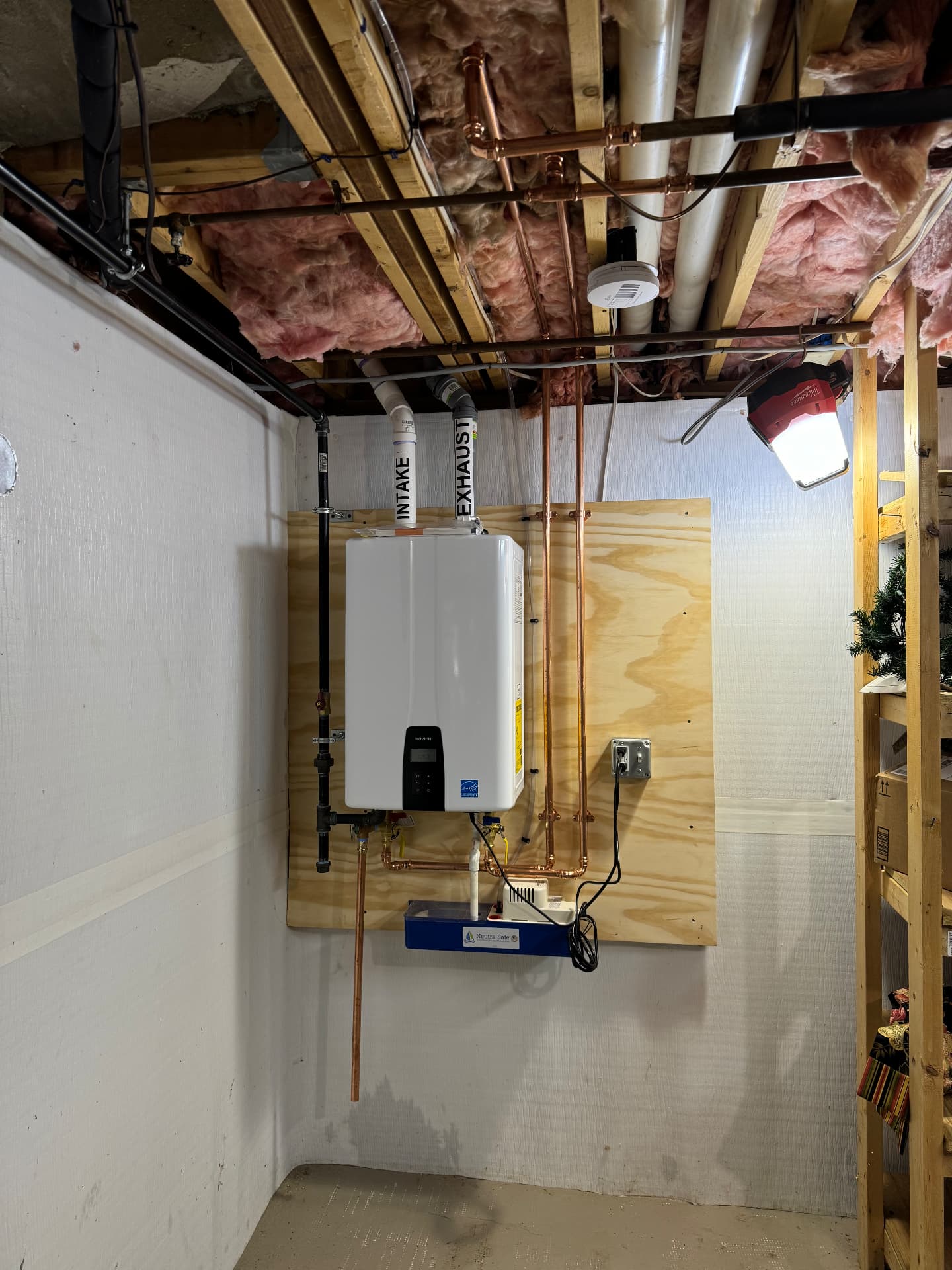
A tankless install is a handful of smaller jobs that all meet at one wall. Here’s the usual order, so nothing about the day surprises you:
- Shut off and drain. Gas and water off, old tank drained. A tank full of sediment can take a while to empty.
- Remove the old heater. The tank, its flue pipe, and any fittings that aren’t staying come out.
- Mount the unit. Level and solidly anchored, in the spot we picked during the home check.
- Run the gas. If the line needs upsizing, the new pipe gets run and tied in here. Every joint gets leak-tested before the unit fires.
- Install the vent. Along the planned route, sealed and pitched the way the manufacturer requires.
- Connect water and drain. Cold supply, hot outlet, relief valve, the condensate line on a condensing unit, and service valves so the heater can be flushed later without cutting pipe. If the copper or fittings near your old heater are green, crusty, or pinholed, this is the time to replace them, while the water’s already off.
- Fill, purge, and fire. Fill the unit, bleed the air out of the lines, start it up, and set it.
Here’s a step people don’t always expect: if your old tank shared a chimney with your furnace or boiler, pulling the tank changes how that chimney drafts. The furnace can end up alone in a flue that’s now too big for it. That has to be checked, and sometimes fixed, so solving your hot water doesn’t create a venting problem for your heat.
How long it takes depends on what changed. A new unit going where the old tank sat, with gas that’s already adequate, is the quickest version. Moving the heater, a longer vent run, or new gas pipe adds time. You’ll know which kind of job yours is before work starts.
Before I call it done, I run hot water at more than one fixture to make sure the temperature holds, recheck every gas joint with the unit running, and confirm the condensate drains and the exhaust goes outside. Then I show you where the shutoffs and service valves are, so a future flush isn’t a mystery.
The gas pipe, water lines, and vent should run straight and square, properly supported, with nothing hanging crooked off the wall. Straight pipe. Clean threads. I’ll leave it looking better than when I showed up.
Massachusetts Permits and Licensing for a Tankless Install
In Massachusetts, only a licensed master or journeyman plumber can do plumbing work in your home, and plumbing permits are issued only to licensed plumbers. A licensed plumber can also do gas fitting work, which is why one license covers both sides of this job. The state’s consumer fact sheet on plumbers and gas fitters lays out the rules.
A tankless install touches your water piping, your gas piping, and the exhaust leaving your house, so expect permits from the town and an inspection afterward. Somebody other than the installer should look at new gas pipe and venting before you rely on it every day. A loose gas joint or a badly pitched vent doesn’t always show itself on day one.
If someone offers to skip the permit to save you money, take that as your answer about how they’ll do the rest of the job.
Before you hire anyone for this work, ask three questions:
- What’s your license number? You can look it up through the state’s online license portal. A real license holder won’t mind you checking.
- Who’s pulling the permit? It should be the licensed plumber doing the work, not you.
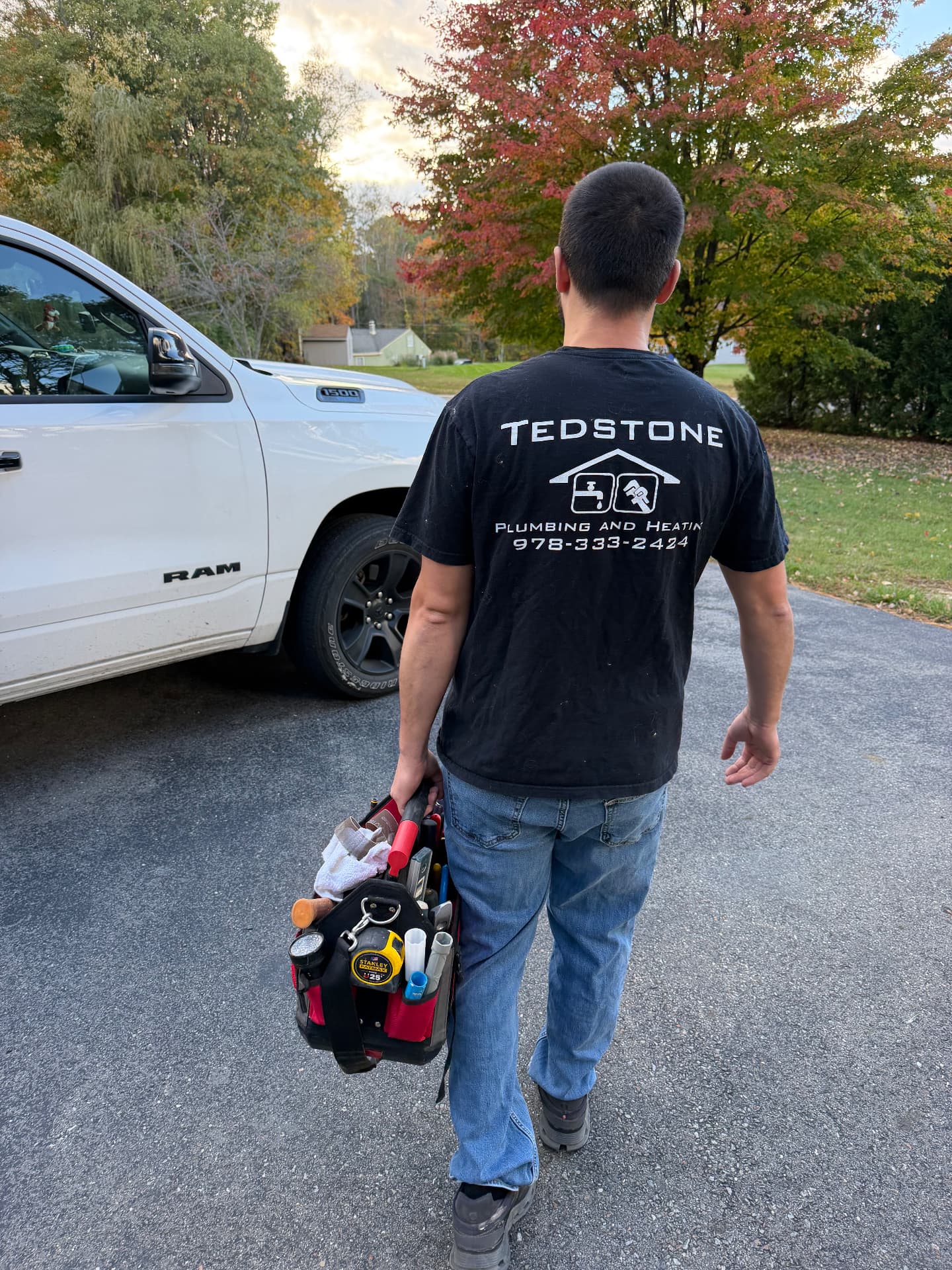
- Who will be here doing the install? A license on the company truck doesn’t mean much if someone else shows up.
I hold Massachusetts Master Plumber license 17100-PL-M and Journeyman Plumber license 34634-PL-J. Tedstone Plumbing & Heating LLC operates under business license 1310026598-PL-C.
If you ever smell gas, don’t wait for a plumber. Leave the house and call your gas company or 911 from outside.
What Affects the Price of a Tankless Install
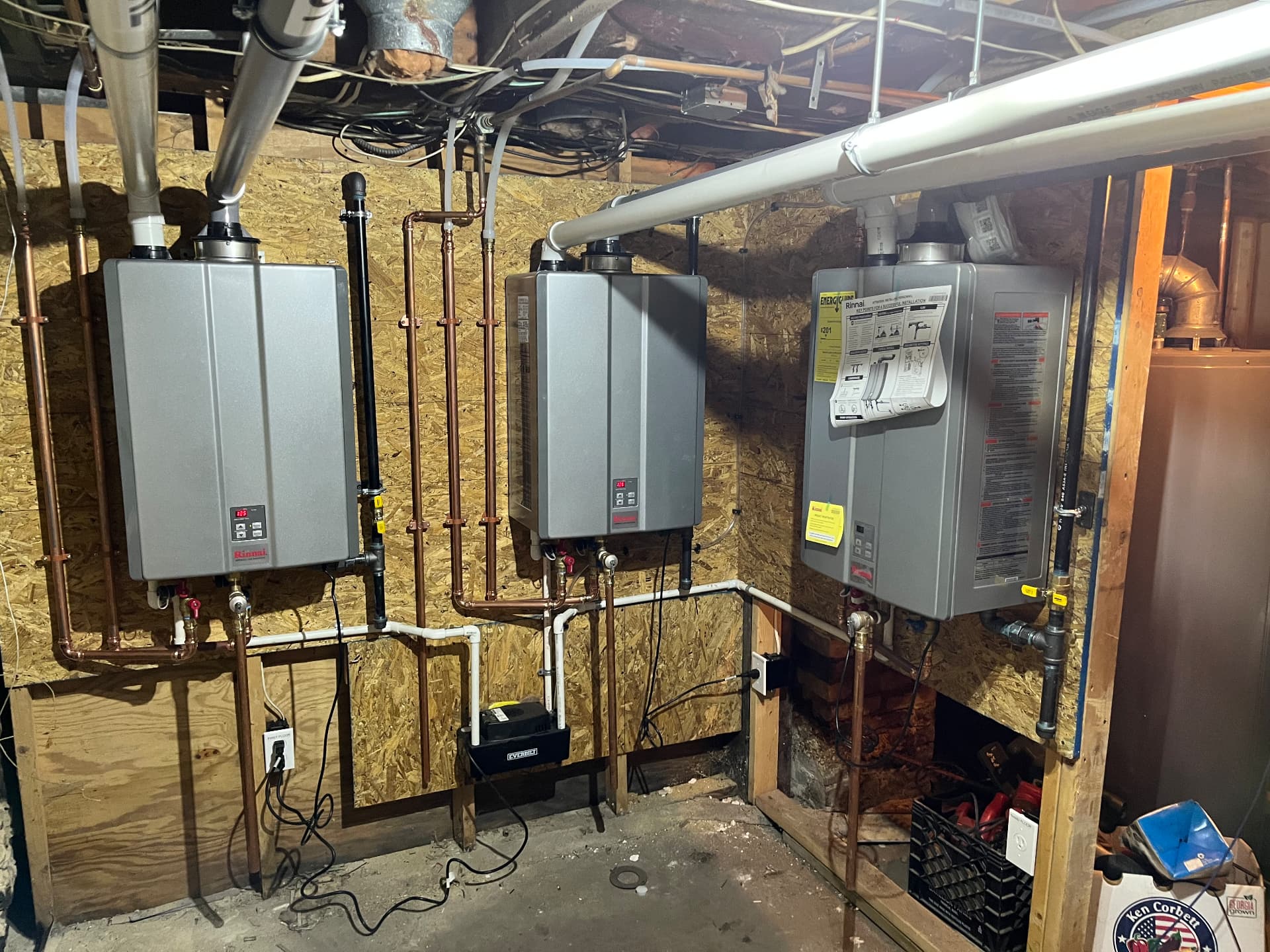
A tankless install costs more up front than swapping one tank for another, and most of that gap isn’t the heater. It’s the work around it. Two houses can get the exact same unit and very different bills, because one was nearly ready and the other needed changes first.
The unit itself is the simpler part. A bigger heater that feeds more fixtures at once costs more, and a condensing model usually costs more than a non-condensing one, though it can be easier to vent. Too small means lukewarm showers. Too big is money spent on hot water you’ll never use.
The house is where the number really moves:
- Gas supply work if the pipe, propane tank and regulator, or gas meter can’t keep up
- Vent route: a short run through the wall beside the heater versus a long run or one through the roof
- Moving the heater instead of putting it where the old tank sat, which lengthens every run
- Chimney correction if the furnace is left alone in an oversized flue
- Pipe and fittings near the heater that are worth replacing while the water’s off
- Water treatment if your water needs it
- Permit and disposal of the old tank, which should be on the quote, not left off it
If you go electric and the panel needs an upgrade, that’s an electrician’s bill on top of the plumbing. Plan for it separately.
You’ll know the price before I start, whether the job is big or small. If it changes, you’ll hear it from me during the job, not on the bill.
"Adam was on time and professional. To have a contractor show up on time and on budget is an amazing feeling."
Whoever you hire, ask these before you sign:
- Does this include the permit, the gas work, the vent, and hauling away the old tank?
- What size unit is this, and how did you pick it?
- If you find something once the old tank is out, how and when will I hear about it?
- Is anything on here a suggestion rather than a requirement?
That last one is important. The quote should cover what your house needs and nothing it doesn’t.
Frequently Asked Questions
What’s the biggest downside of going tankless?
The upfront work it can take to get your house ready. Gas lines sometimes need upsizing, the vent needs a new route, and an electric unit may need a panel upgrade. None of that makes tankless a bad choice, but it does make the install more involved than swapping one tank for another.
Can a tankless water heater keep up with two showers at once?
Yes, if it’s sized for that from the start. Sizing comes down to how many gallons a minute the unit has to heat, based on what runs at the same time in your house and how cold the incoming water gets in winter. Counting your real usage matters more than square footage.
Can I go tankless if I’m on a well?
Yes, but test the water first. Hard or iron-heavy well water builds scale inside a tankless unit, which cuts performance over time. If the test shows a problem, treat for what’s there and nothing more, then install.
Find Out What Your House Needs Before You Shop for a Heater
Call Adam. I’ll look at your gas, venting, and water lines, tell you whether you’re looking at a simple swap or a bigger job, and give you the price before I start.