
Water already coming through a wall or ceiling? Shut off the main water valve first, then call. Stay clear of any water coming through a light fixture. If the heat is out too, that’s the bigger problem, because the rest of the house is next.
Frozen Pipe or Something Else? Check This First
A frozen pipe usually shows up as one fixture, or one side of the house, going dry after a hard cold night while everything else works. A two-minute walk through the house tells you whether it’s a freeze, and what you notice helps me show up knowing where to look.
One faucet or all of them? If the kitchen sink is dry but the bathroom works, a section feeding that sink likely froze. If nothing in the house runs, the problem may be upstream. On Templeton town water, call Templeton Municipal Light & Water at 978-939-5323 to find out whether something’s wrong on their side before you start warming pipes. On a private well, it may be the pump or a frozen line at the pressure tank.
Cold, hot, or both? No cold water but working hot is a classic frozen line. Hot gone and cold fine is less likely to be ice and can point to the water heater.
Where’s that fixture? Sinks on an outside wall, pipes in an unheated garage or crawlspace, and lines near a bulkhead or the sill are the usual suspects. Pipes in the warm middle of the house rarely freeze first.
When did it stop? Dry taps the morning after a bitter, windy night fit a freeze. Pressure that crept down over weeks is a different story.
Can you see the pipe? Frost, a bulge, or a hairline crack all tell you something.
Then check the heat. If the boiler or furnace quit overnight, the frozen pipe is a symptom. Thawing it won’t help much while the house keeps getting colder, so the heat comes first and the plumbing right behind it.
Sometimes it isn’t the pipes at all. A well pump that won’t kick on, a tripped breaker, or a town water problem can all look like a frozen line from the kitchen sink. If it’s not a plumbing problem, I’ll tell you who to call. No sense paying a plumber to stand in your basement and confirm it’s the power company’s issue. If it is, and it’s inside your house, it’s yours to fix: Templeton Water’s own rules say the utility doesn’t take responsibility for conditions in a customer’s plumbing.
Thawing It Yourself: What’s Safe, and When to Stop
If you’ve found the cold spot and nothing’s leaking, you can often thaw it yourself with patience and gentle heat. This lines up with the American Red Cross guidance on preventing and thawing frozen pipes.
Before you start, find your main water shutoff. In most houses it’s in the basement where the water line comes through the foundation. On a well, look near the pressure tank. You want to know where it is before you need it, not while water is running across the floor.
Open the dry faucet. Hot and cold. Once the ice starts to melt, the water needs somewhere to go, and moving water helps clear the rest.
Warm from the faucet back toward the frozen spot so melted water drains out the tap instead of getting trapped behind a plug of ice.
Use gentle heat: a hair dryer, an electric heating pad, or towels soaked in hot water. A space heater kept well away from anything that can burn can warm a cold cabinet or basement corner.
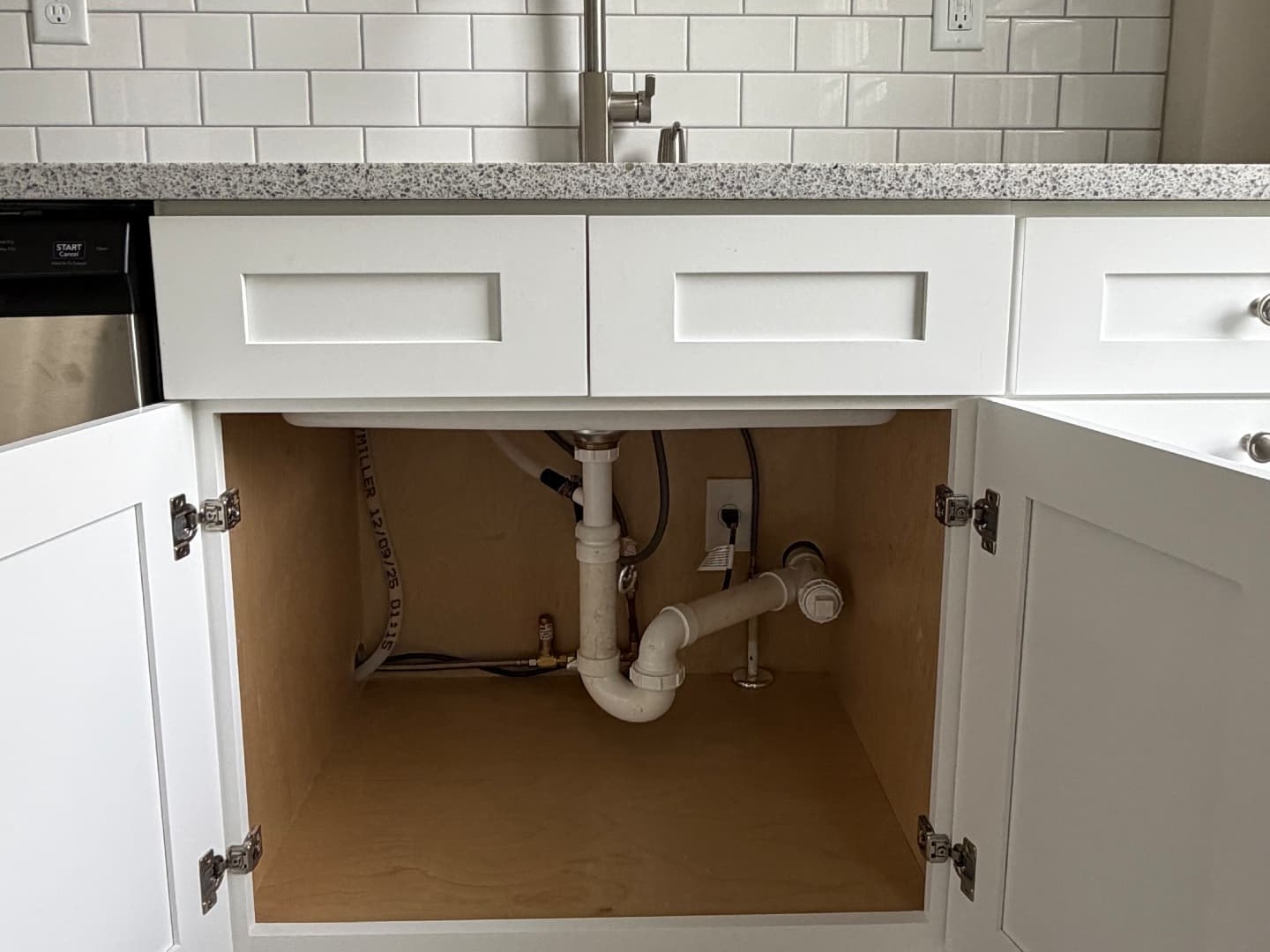
Open the cabinet doors under any sink on an outside wall so house heat reaches the pipes.
Stay with it. It can take a while. Don’t leave a space heater running in an empty room.
Never use a torch, a propane or kerosene heater, or any open flame. The framing and old insulation behind that pipe catch fire easier than you’d think. Don’t blast one spot with high heat either. Plastic pipe can soften. And don’t whack the pipe with a wrench to break the ice loose. I’ve seen what that does.
Stop and call me if:
- You see dripping, spraying, or a wet spot on a ceiling or wall. Shut off the main first.
- The frozen section is inside a wall, under a floor, or in a crawlspace you can’t safely get into.
- You’ve given it an hour of gentle heat and nothing has changed.
- You can see a crack, a bulge, or a split.
- Water comes back weak, or you hear hissing behind a wall after the tap is shut.
That last one is important. A split often hides until the ice melts, so a pipe that looks fine frozen can start leaking the minute it thaws. Run the water a few minutes and look around for drips.
"Adam came out on a last minute emergency and took care of us right away! Keeping our home clean like it was his own."
I’m one plumber, not a dispatch center, so I won’t promise a time before I’ve checked my schedule. When you call, you’ll get a real time from me, and I’ll text you when I’m on the way.
What Happens When I Get There
You tell me what you noticed. Which faucet went dry, hot or cold, when it stopped, and whether you’ve been warming anything. That points me at the right wall before I touch a thing.
I find the frozen section, finish thawing it, and test it under pressure. That test is the whole ballgame. Sometimes the news is good: the line thaws, holds pressure, and there’s nothing to fix. You just needed the ice gone.
If something failed, I show you. The crack, the bulge, or the joint that pulled loose, so you’re not taking my word for it. Then you get the price. If it changes during the job, you’ll hear it from me then, not on the bill.
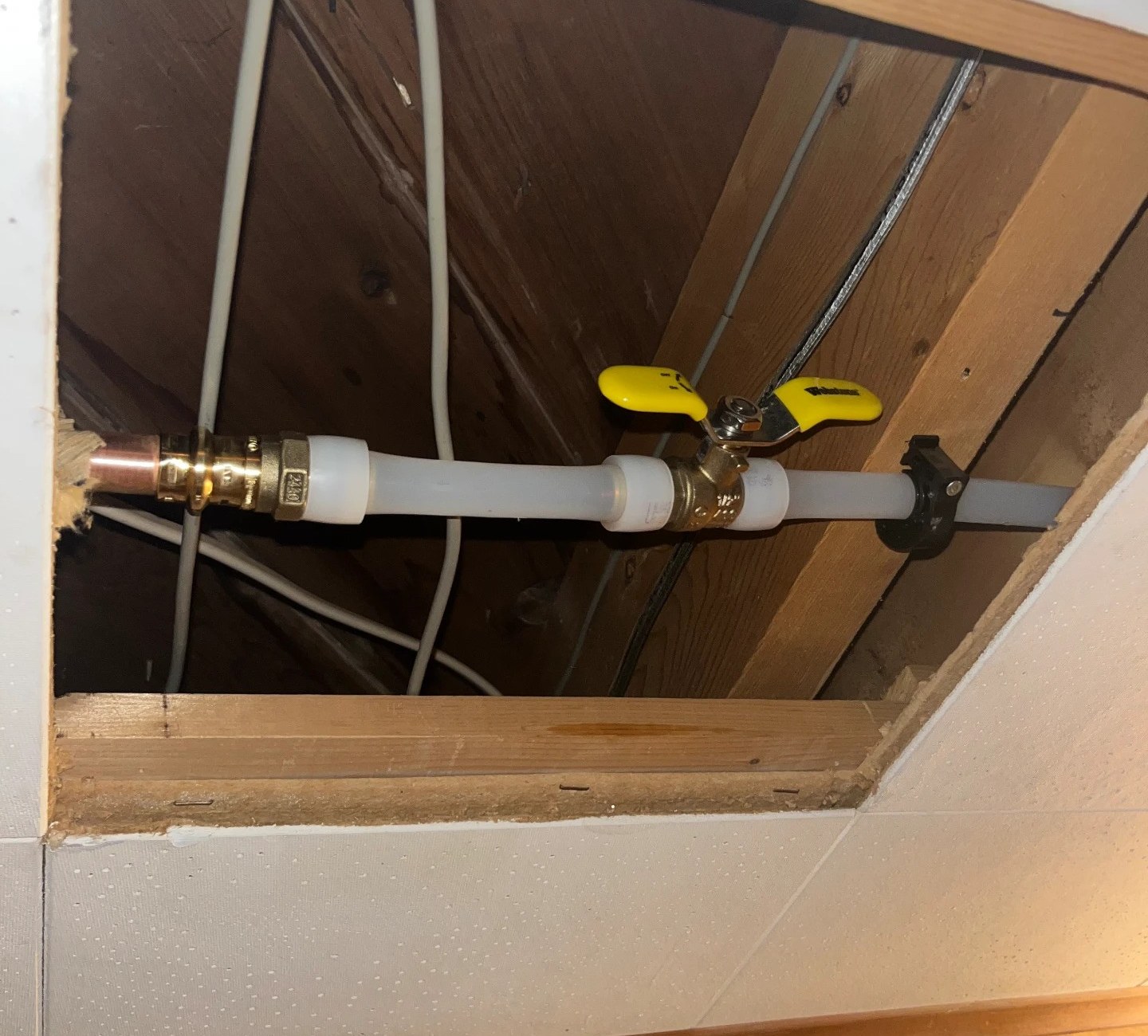
The fix stays narrow. For most freeze damage, the split piece gets cut out and a short length of new pipe goes in, joined to good pipe on each side. If the crack is inside a wall or ceiling, I open just enough to reach it. A bigger re-pipe only comes up when the old line is failing in more places than one freeze can explain, and if that’s the case, I’ll show you why.
Then I watch it. Water back on, and I check every fitting I touched plus the run on either side, because a freeze can stress a joint a few feet from the split. Then I run each fixture on that line so you can see water and pressure come back.
I leave it right. Straight pipe, fittings that line up, scraps hauled out, and the work area wiped down. I’ll leave it looking better than when I showed up. Before I go, you’ll get a plain answer on why that spot froze, so you know what to watch next winter.
If the leak soaked a ceiling or a finished basement, I’ll fix the pipe. Drying out drywall and patching the ceiling isn’t plumbing, so I’ll tell you who to call for that part.
Why the Split Is Often Somewhere Else
Pipes don’t freeze just because it’s cold outside. They freeze because cold air reaches water that’s sitting still. A pipe in a warm room handles a bitter night fine. Put the same pipe behind a drafty sill, or in an outside wall with wind coming through a gap, and it can freeze solid by morning.
The ice usually isn’t what splits the pipe. When a plug of ice forms, the water trapped between it and a closed faucet has nowhere to go. As more ice forms, pressure in that trapped stretch climbs until something gives. That’s why the crack often turns up a foot or two from where the pipe was coldest, and why opening the faucet early helps: it gives that pressure an exit.
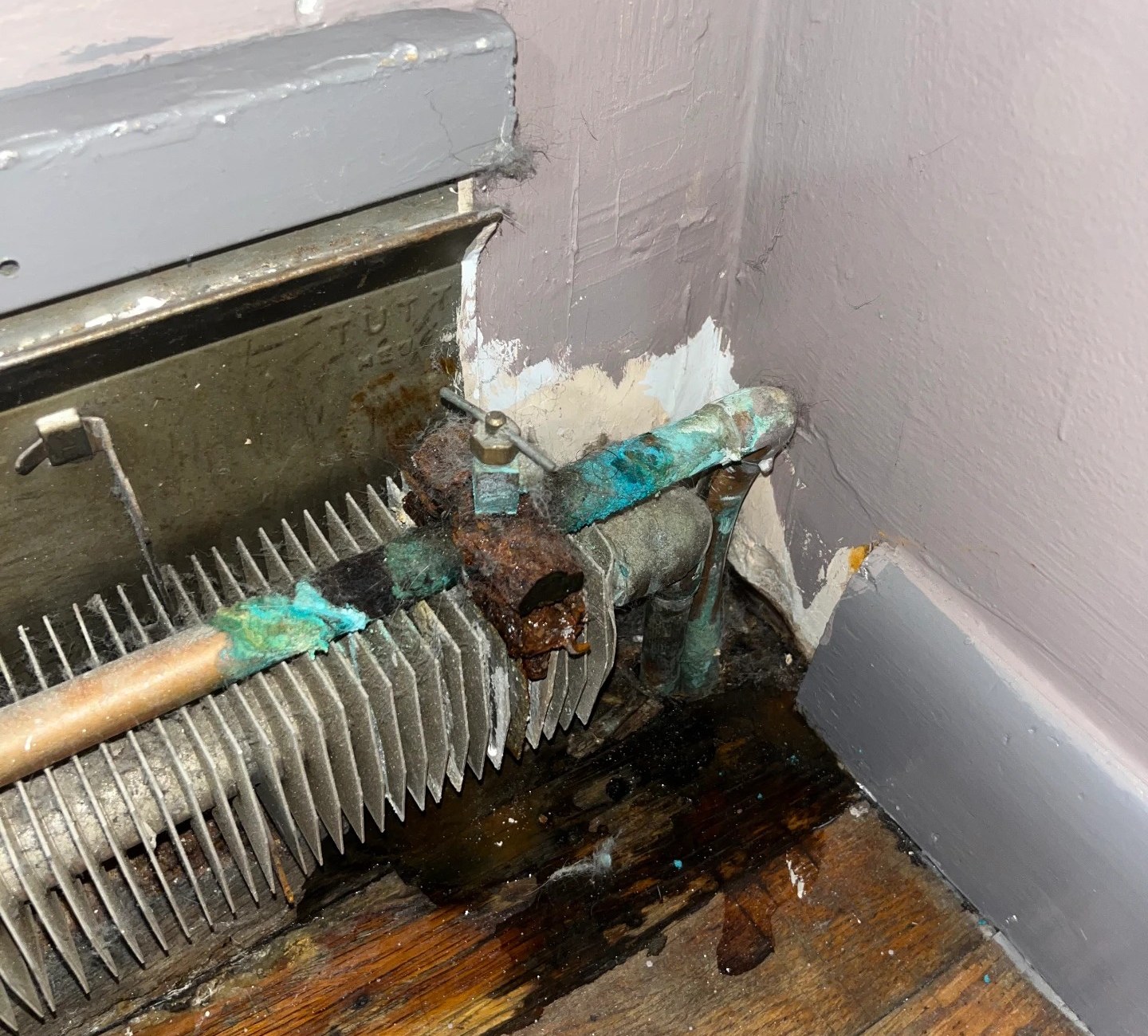
It’s also why the weakest joint on the line tends to be the one that lets go. Before I started Tedstone, I walked into a kitchen one winter where water was pouring out of the ceiling lights. The owners were away, the heat had been turned down on one of the coldest days of the year, and upstairs a heating pipe with a barely soldered joint had popped right off. We shut the water off, found the joint, and I got the owner and a restoration company on the phone. The kitchen had to be gutted. One badly made joint, one cold day.
Massachusetts Requires a Licensed Plumber for the Repair
Thawing a pipe in your own house is your business. Once a pipe has split and needs to be cut out and replaced, it’s plumbing work, and Massachusetts law prohibits anyone but a licensed plumber from installing, removing, or repairing plumbing. Not a handyman, not a general contractor, and not a brother-in-law with a torch and a video.
That isn’t arbitrary. A freeze repair looks simple from the outside: a few inches of new pipe and two fittings. The trouble is what you can’t see. A freeze can crack the pipe in more than one spot, loosen a joint a few feet away, or stress a fitting that holds today and lets go next month.
Checking the whole run under pressure, with the right materials for your system and your drinking water, is the job the license stands for.
Some repairs also need a permit from the town, and some minor ones don’t. Ask whoever you hire. If they don’t know, or tell you not to worry about it, that tells you something.
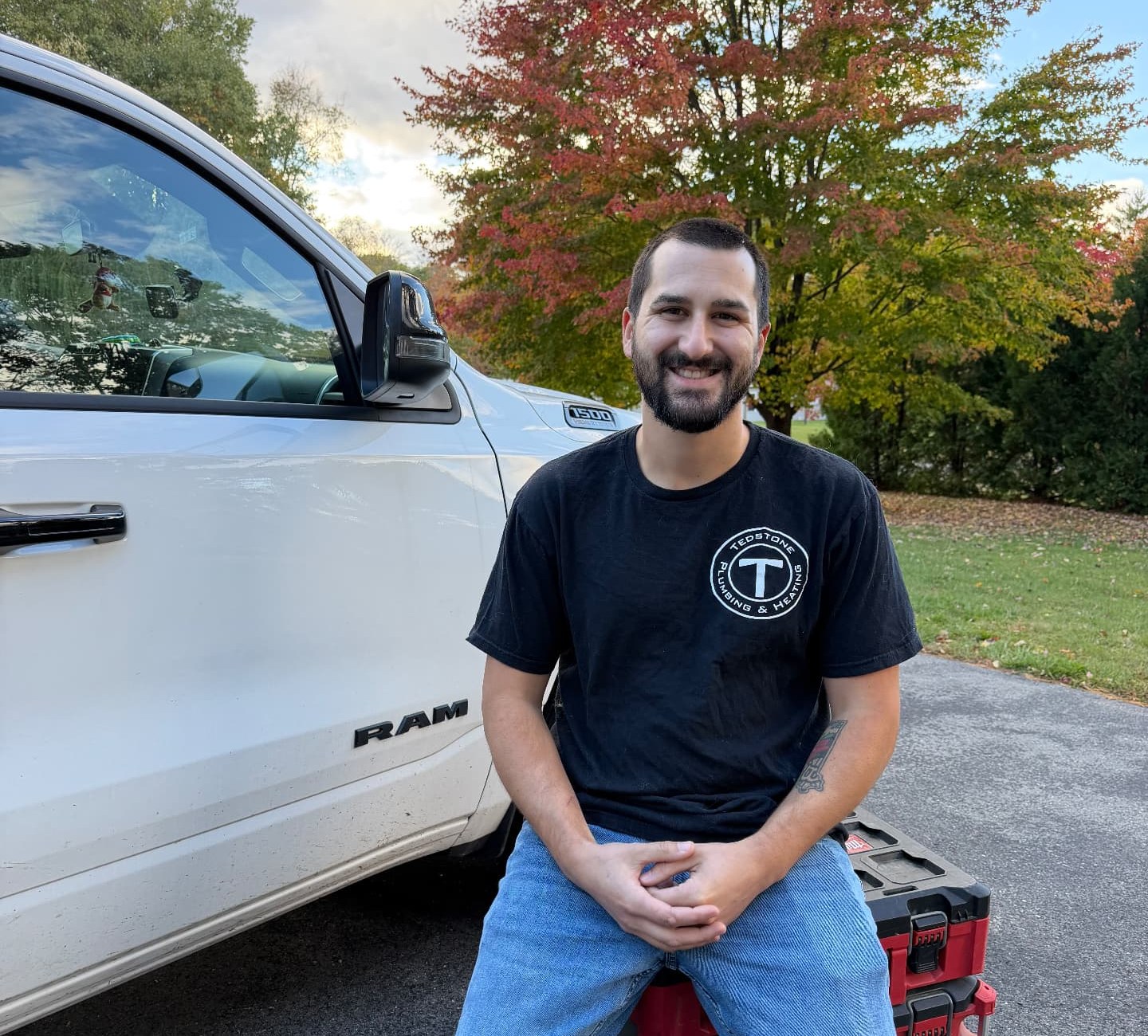
Massachusetts licenses plumbers in levels. A journeyman can do plumbing work and work for himself. A master plumber has passed a second exam after more time in the trade, and a master license is what it takes to run a plumbing company as an LLC, like Tedstone. I hold both:
- Master plumber: 17100-PL-M
- Journeyman plumber: 34634-PL-J
- Business license: 1310026598-PL-C
You can look up any plumber’s license through the state’s online license portal. It takes a minute, and it’s worth doing before anyone touches your pipes. Then ask:
- Is the license number yours, or the company’s?
- Who exactly is coming to my house?
- Does this repair need a permit?
- Will I know the price before you start?
With me, the answers are short. When you call, you get me. The license numbers are mine, and so is the name on the work.
Keeping It From Happening Again
A few habits make a freeze more likely, even in a tight house: turning the heat way down at night or while you’re away, closing off a back room to save on heating, leaving the garage door open when pipes run along a garage wall, and leaving a hose on the outside faucet into winter.
Most of the fix is cheap and boring, which is the good kind:
- Keep the heat steady day and night on cold stretches, including rooms you don’t use much. If you’re away, the Red Cross recommends leaving the heat set no lower than 55°F. Or have someone check the house, or shut the main off.
- Seal drafts where the house sits on the foundation, especially near pipes.
- Sleeve exposed lines in an unheated basement corner, garage, or crawlspace with foam pipe insulation.
- Disconnect hoses in the fall and shut the inside valve for outdoor faucets if you have one.
- On the worst nights, let cold water drip from the faucet whose pipes froze before.
If you’re on a well and the pressure tank or supply line sits in a cold spot, it needs the same attention. No water at the tank means no water anywhere.
If a pipe freezes in the same spot every winter no matter what you do, you don’t need a whole new system. Usually one short run is in the wrong place. Moving it a few feet into a warmer wall, or insulating it properly, is often a better repair than thawing it every January. If it’s your outside faucet that keeps splitting, that’s a short outdoor plumbing repair.
Frequently Asked Questions
Should I leave my faucets dripping to keep pipes from freezing?
On very cold nights, a thin drip of cold water from the faucet served by exposed or problem pipes helps, because moving water is harder to freeze. You don’t need every faucet running. Keeping the heat steady in that part of the house matters more.
Can I run a space heater near a frozen pipe overnight?
Only if you’re there with it. Keep it well away from anything that can burn, don’t aim it straight at the pipe, and never leave it running in an empty room or while you sleep.
The pipe thawed and nothing leaked. Do I still need a plumber?
Not necessarily. Run the water for a few minutes, then check the pipe, nearby walls, and ceilings below for drips or damp spots. If pressure is normal and everything stays dry, you’re likely fine. Weak pressure, hissing, or a new wet spot means a split somewhere you can’t see, and that’s when to call.
Find the Spot That Froze, and Fix Only What Failed
Call me. I’ll find the frozen section, test it under pressure, show you anything that failed, and give you the price before I fix it. See all of Tedstone’s plumbing services in Templeton.