
Start With a Test, Not a System
Every water treatment decision should start with what's in the water. How you find that out depends on where your water comes from.
On town water: Your water system tests regularly and has to publish a water quality report every year. In Templeton, Baldwinville, East Templeton and Otter River, that's Templeton Light & Water, which draws its supply from groundwater wells. The report is the place to start. Some concerns, like lead from the pipes inside your own house, won't show up in it, because they happen after the water leaves the main.
On a private well: You're the water system. EPA doesn't regulate private wells, and in Massachusetts they're regulated locally by your Board of Health. MassDEP recommends that well owners test with a state-certified lab. The recommended schedule is a full test at first, then at least once every ten years, with bacteria and nitrate tested every year.
Your fixtures can give you clues before the lab does. Orange or rust-colored stains usually point to iron or manganese. White, crusty buildup on faucets and shower heads usually means hard water. A lab test tells you how much, and whether anything is in there that you can't see or taste.
Manganese is worth a closer look if you have a baby at home. It's more than a staining problem: MassDEP advises using water with manganese below 0.3 mg/L for infants, including for formula.
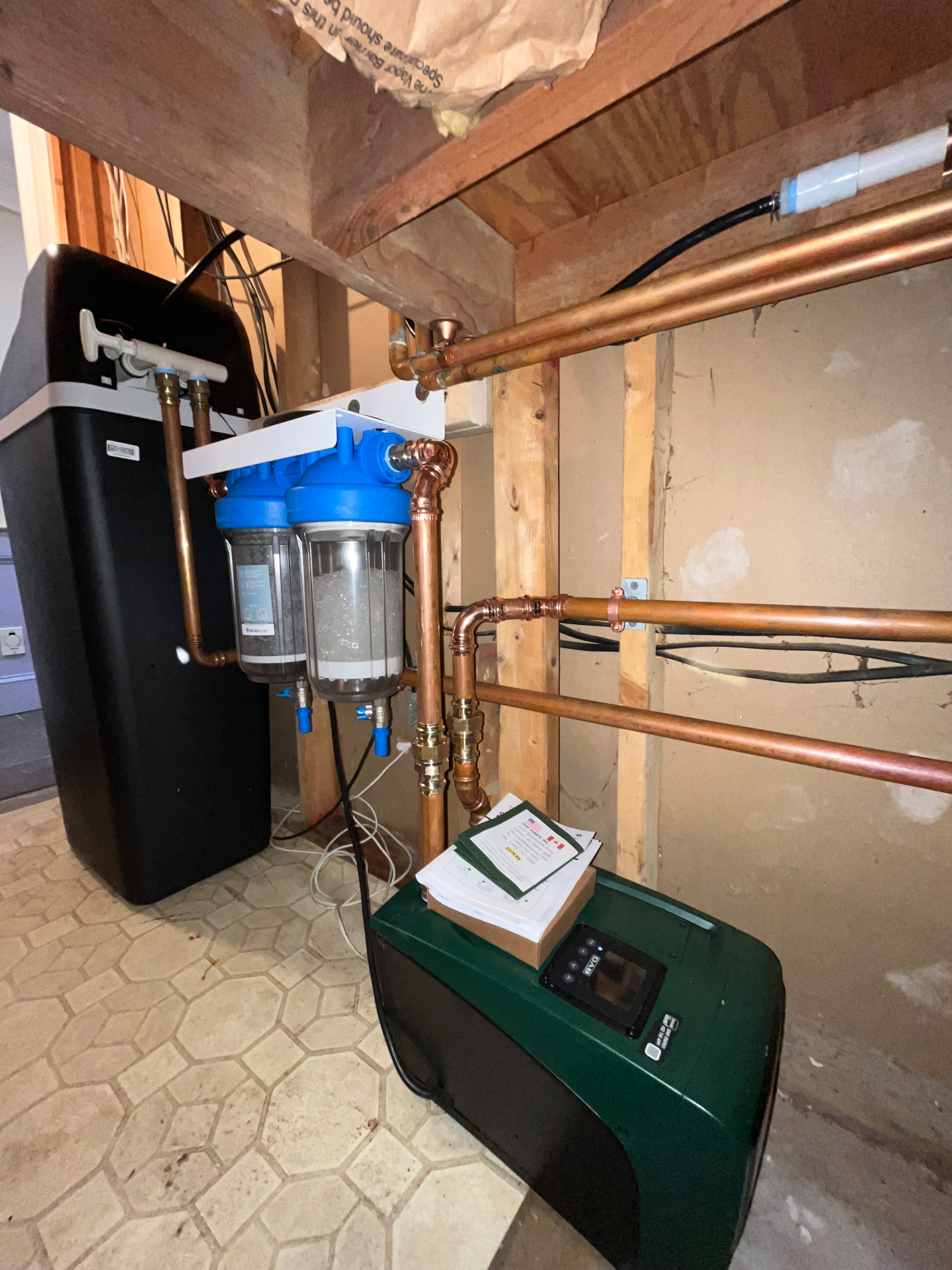
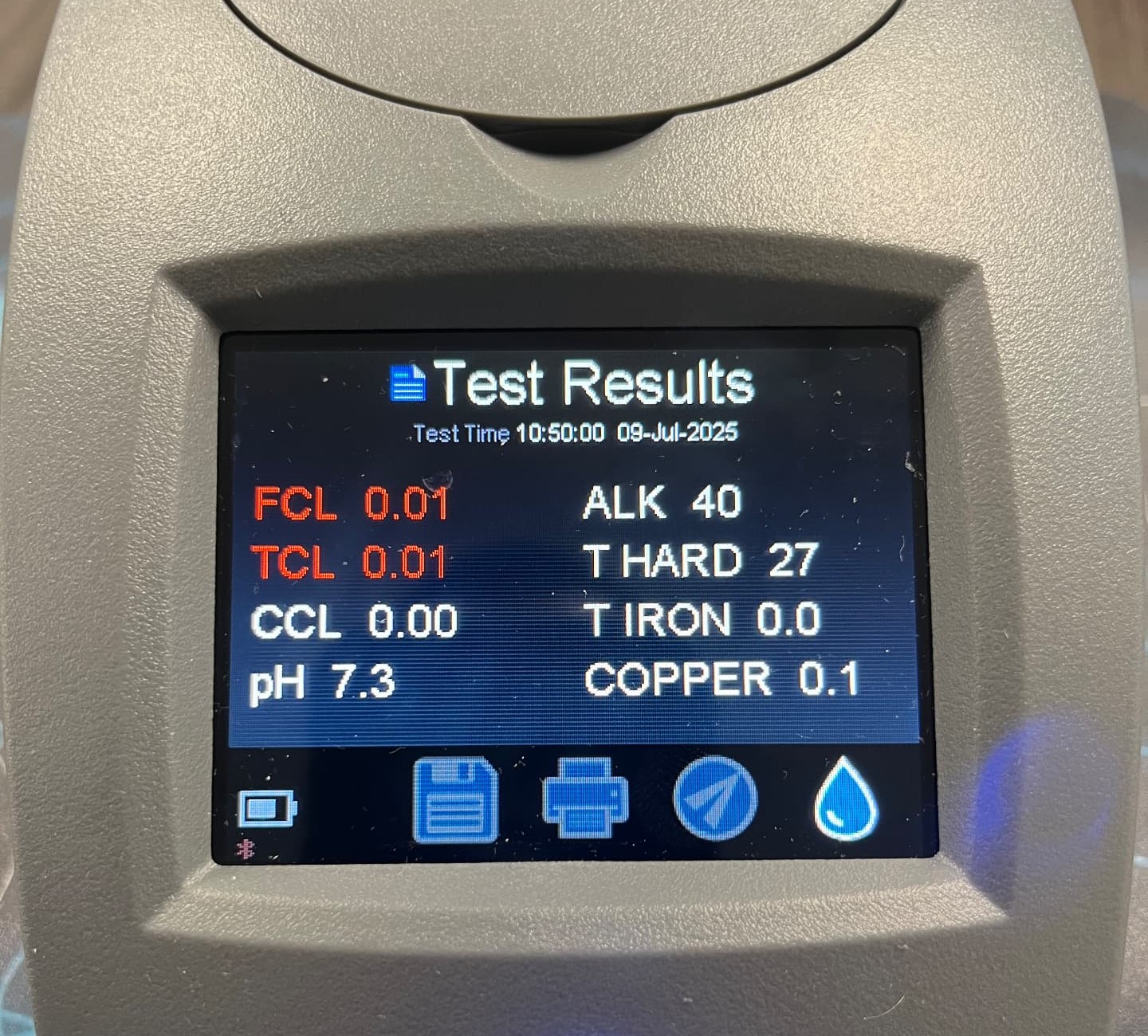
How I test: I run a basic test through my plumbing supply house for pH, hardness, chlorine, iron and alkalinity. Those five drive most treatment decisions. I go through the results with you in plain English, and you'll hear what's worth treating and what isn't. It's not a full lab test, though. For bacteria, nitrate, manganese, lead or anything else you can't see, a state-certified lab is the right call, especially on a well. If you already have lab results, send them over and I'll use those too.
"Responsive and gives advice. I've had questions about the plumbing in the house and he takes his time to answer questions."
Which System Does What
- Reverse osmosis (RO): A system under the kitchen sink that treats your drinking and cooking water at one tap.
- Whole-home filtration: Treats all the water coming into the house, before it reaches any fixture.
- Water softener: Removes the hardness minerals that leave scale on fixtures and inside your water heater.
- Iron removal: Takes out iron (and often manganese) before it stains everything it touches. Both are common in Massachusetts groundwater.
One system rarely does everything. A well with iron and hardness might need both, and still need an RO for drinking water, or it might not. That's what the test is for.
When you're comparing systems, look at what each one is actually certified to reduce. Independent certifications (NSF/ANSI standards) are specific to particular contaminants. If you're worried about something in particular, whether it's lead, PFAS or microplastics, make sure the system you buy is certified for that.
Why a Licensed Plumber Should Install It
In Massachusetts, the Board of State Examiners of Plumbers and Gas Fitters oversees the connections and piping for water filters, softeners and reverse osmosis systems, from the water source to the fixture. The Board's policy is that this equipment must be installed by a properly licensed Massachusetts plumber.
That's me. I'm not a water-treatment salesman who hands the install off to someone else. I'm the licensed plumber who does the work, so the person recommending the system is the one who has to install it properly and stand behind it.
Got a Town Letter About Lead? A Filter Isn't the Same as a New Line
If your town told you your service line is lead, galvanized or unknown, a filter certified for lead reduction can lower lead at the tap you use it on. It doesn't change the pipe. Whether and how to replace the line is a separate conversation with your water department. I don't replace water service lines; that takes a contractor set up for digging to the street. Massachusetts doesn't require homeowners to replace their portion, but MassDEP strongly encourages it.
Already Have a System?
I service and repair existing filtration systems and change filters, including systems I didn't install. If a softener's stopped softening, an RO's slowed to a trickle, or you inherited a system with the house and have no idea what it does, tell me what you've got.
What Affects the Price
- One sink or the whole house: a reverse osmosis system at one tap costs less than whole-home treatment
- What your water needs: one problem, or several that need more than one system
- Ongoing costs: replacement filters, media, or salt for a softener
You'll know the price before I install anything. And if the test says your water doesn't need treatment, that's what I'll tell you.
Private Wells Around Here
A lot of homes around here are on private wells, which is why iron, hardness and treatment questions come up so often. Private well rules are set town by town through each Board of Health, so if you're buying a house with a well here, check the town's requirements. MassDEP recommends testing a well before you buy.
Find Out What Your Water Needs Before You Buy Anything
Send me your test results, or tell me what you're seeing, whether it's stains, taste, smell or a letter from your town. I'll tell you what I think it needs, and what it doesn't.