
No Heat? First, Sort Out How Urgent It Is
Two situations aren’t repair questions at all.
If your carbon monoxide alarm goes off, leave the house and call the fire department from outside. That’s the instruction in the Massachusetts Department of Fire Services carbon monoxide safety guide.
If you smell gas, leave and call your gas company or 911 from outside. Get everyone out first. The repair comes after.
Call today if you see any of these:
- The heat is out and the house is getting colder. In a Central Mass cold snap, pipes in outside walls and the basement are next.
- Water is leaking from the boiler, a pipe, or around the base of the unit.
- The system starts, runs a minute, then shuts off, over and over.
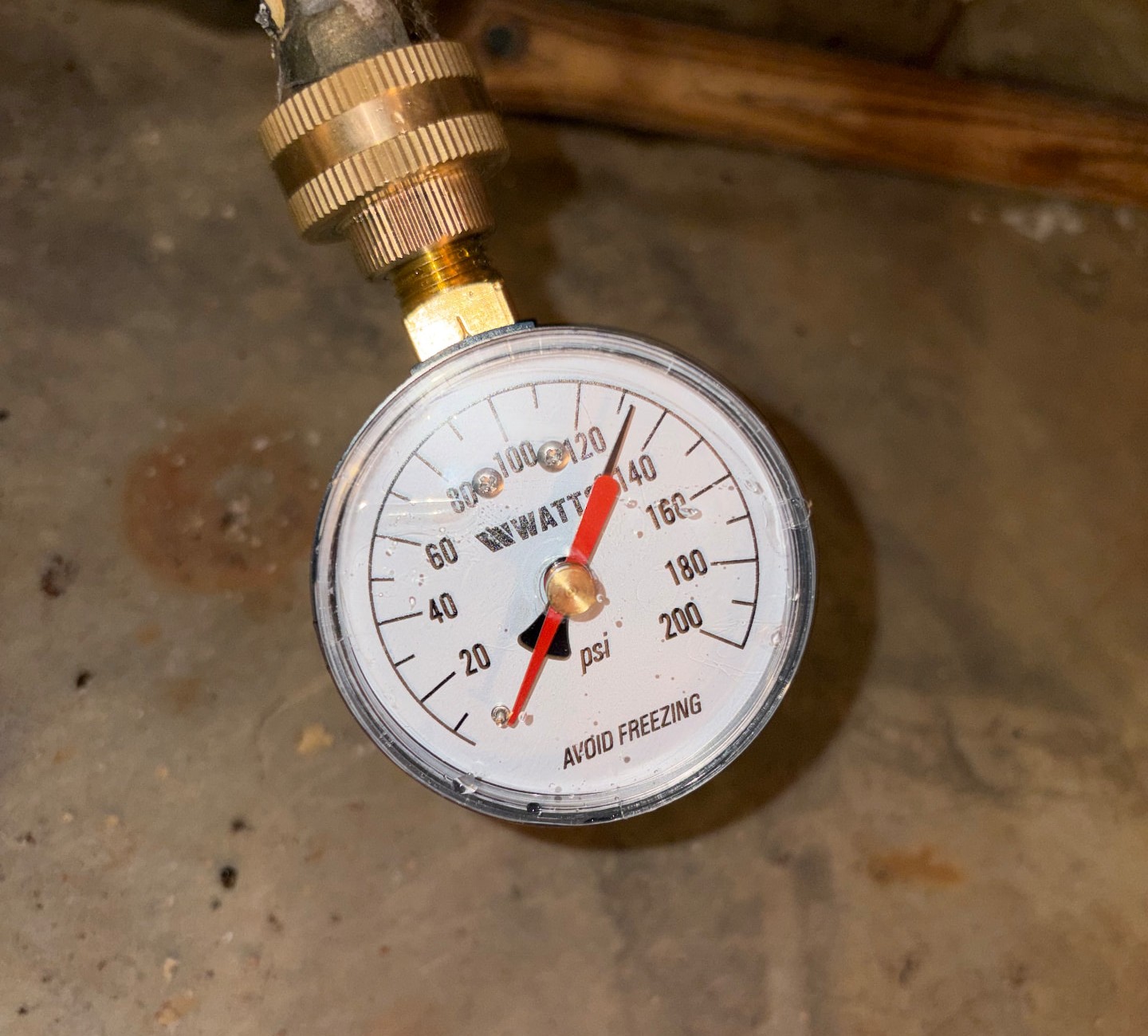
- The pressure gauge on the boiler is way off from where it usually sits.
- There’s banging, gurgling, or a loud noise that wasn’t there last week.
These can usually wait a few days, as long as the house is staying warm:
- One room, radiator, or zone runs cooler than the rest.
- The system works but seems to run longer than it used to.
- A small drip at a valve that a towel can handle for now.
I’m one plumber, not a dispatch center. When you call, I’ll check my schedule and give you a real time, not a window, and I’ll text you when I’m on the way.
Quick Checks Before You Call
A few things are worth a look first. None of them need tools, and none of them need you inside the unit.
- The thermostat. Is it set to heat, and set higher than the room? Are the batteries dead?
- The service switch. There’s usually one near the boiler, and many older houses have a second one at the top of the basement stairs that looks just like a light switch. People flip it off by accident reaching for the lights.
- The breaker. Look for one marked boiler, burner, or heat. If it’s tripped, flip it all the way off and back on once. If it trips again, leave it off and call.
- The power. No boiler runs without electricity, even an oil or propane one. If the lights are out too, it’s an outage, not a heating problem. In Templeton, report it to Templeton Municipal Light & Water at 978-939-5323.
- The fuel. If you heat with oil or propane, check the tank gauge. Templeton has no natural gas utility, so a gas-fired boiler here runs on propane from a tank. A missed delivery or an empty tank causes plenty of no-heat calls.
- The vent pipes outside. High-efficiency units often vent through a side wall with plastic pipe. If snow or ice has covered it, the system shuts itself down. Clear it away gently.
- The cold room. A couch against a radiator or a rug over a baseboard can make one room feel broken when it isn’t.
If a radiator is cold at the top and warm at the bottom, there may be air trapped in it. Bleeding it is fine if you’ve done it before and have the key. If you haven’t, leave it. I’d rather show you once than have you open the wrong valve.
One thing not to do: if your boiler has an oil burner with a red reset button that’s popped out, don’t keep pressing it. The button isn’t the problem. It’s telling you something else failed, and pressing it again and again can turn a simple repair into a bigger one. Leave it and make the call. The same goes for the gas valve and any cover held on with screws.
If none of this brings the heat back, jot down a few things before you call:
- Any blinking light or code on the unit, and its color
- The number on the boiler’s pressure gauge
- What you heard or smelled before it quit
- When it started, and whether it’s on and off or out completely
That note goes straight to the person doing the work, because that’s me. You won’t explain the problem to a dispatcher and then again to whoever shows up.
Most No-Heat Calls Come Down to One Part
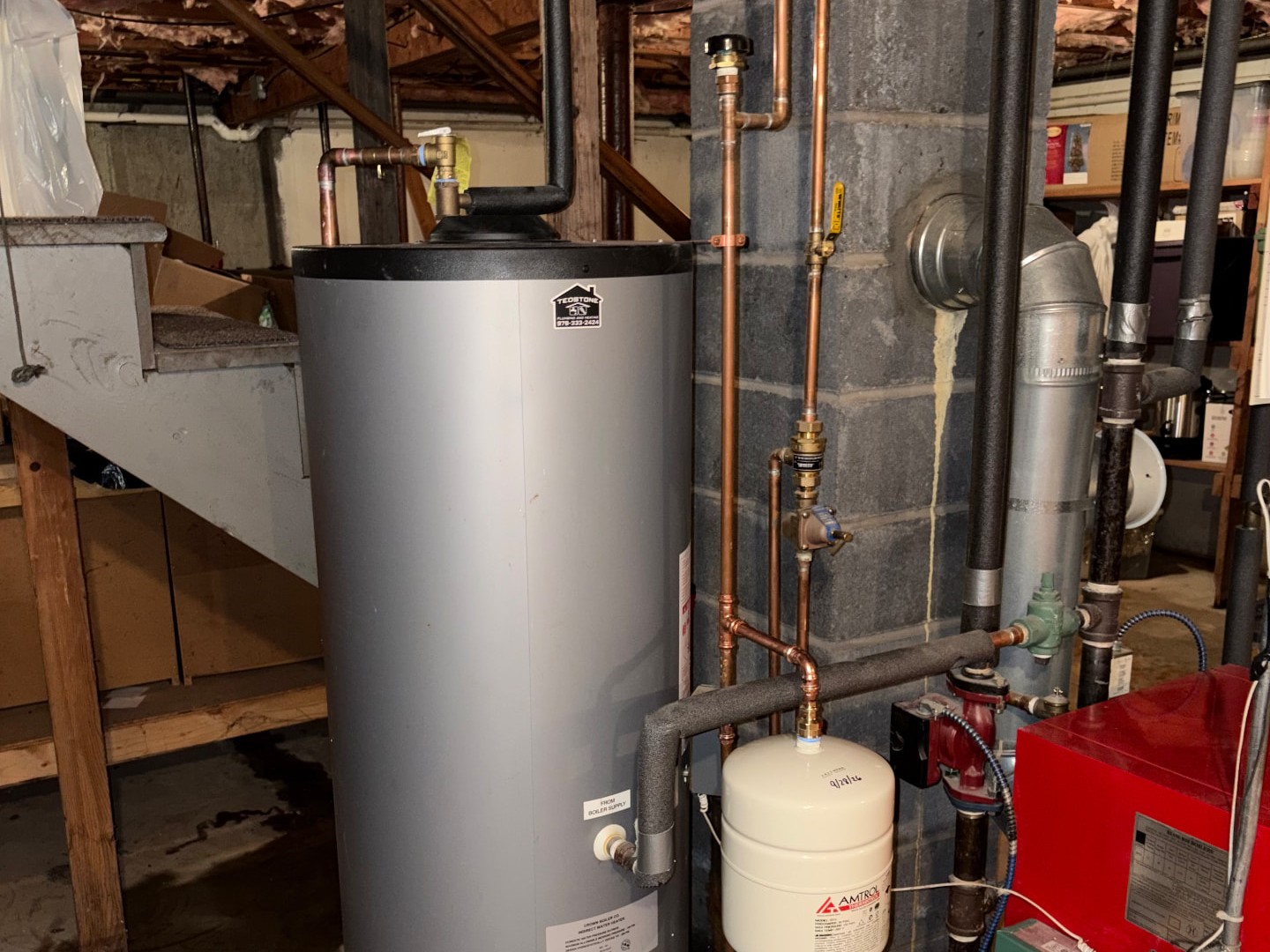
A hot-water heating system is a lot of small parts working together. When the house goes cold, one of them usually quit, and a single part is a repair. These are the usual suspects:
- Circulator pump. It moves hot water out to your radiators or baseboard. If it seizes, the boiler gets hot but the house stays cold. The pipe right at the boiler is hot and the ones a few feet away aren’t.
- Zone valve. Many houses split the heat into zones, one valve each. If one sticks shut, that part of the house goes cold while the rest is fine.
- Expansion tank. Water grows as it heats, and this tank gives it room. When the tank waterlogs, the pressure climbs every time the boiler fires.
- Pressure relief valve. The safety valve on the side of the boiler. If it drips, it may be worn, or it may be doing its job because the pressure is too high. Either way, never cap or plug it.
- Fill valve. It keeps the right amount of water in the system. If it fails, pressure drops and the boiler can lock itself out.
- Leaking fittings and valves near the boiler. A slow seep lowers the system pressure until the boiler gives up.
Most of that is pipe and valve work, which is what I do every day.
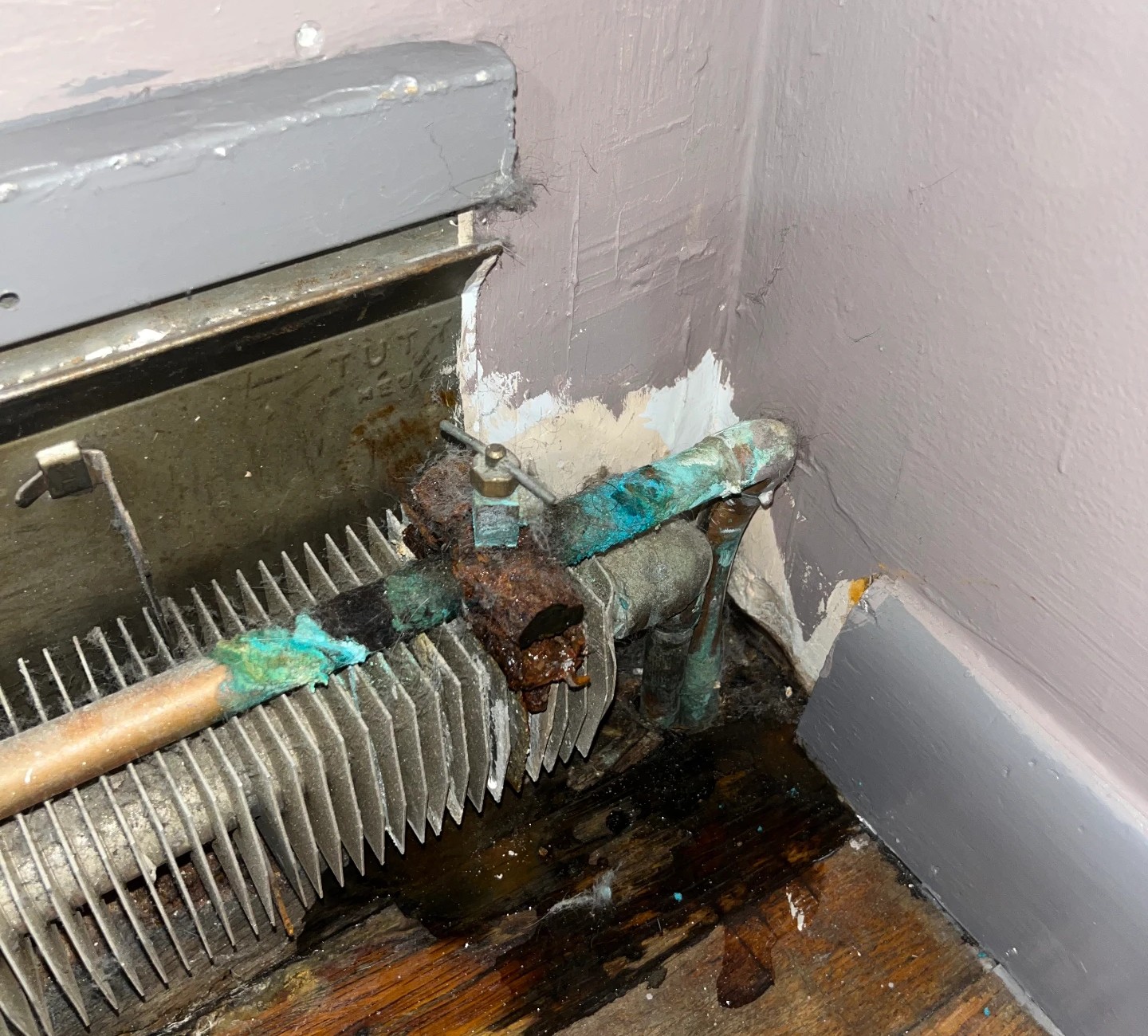
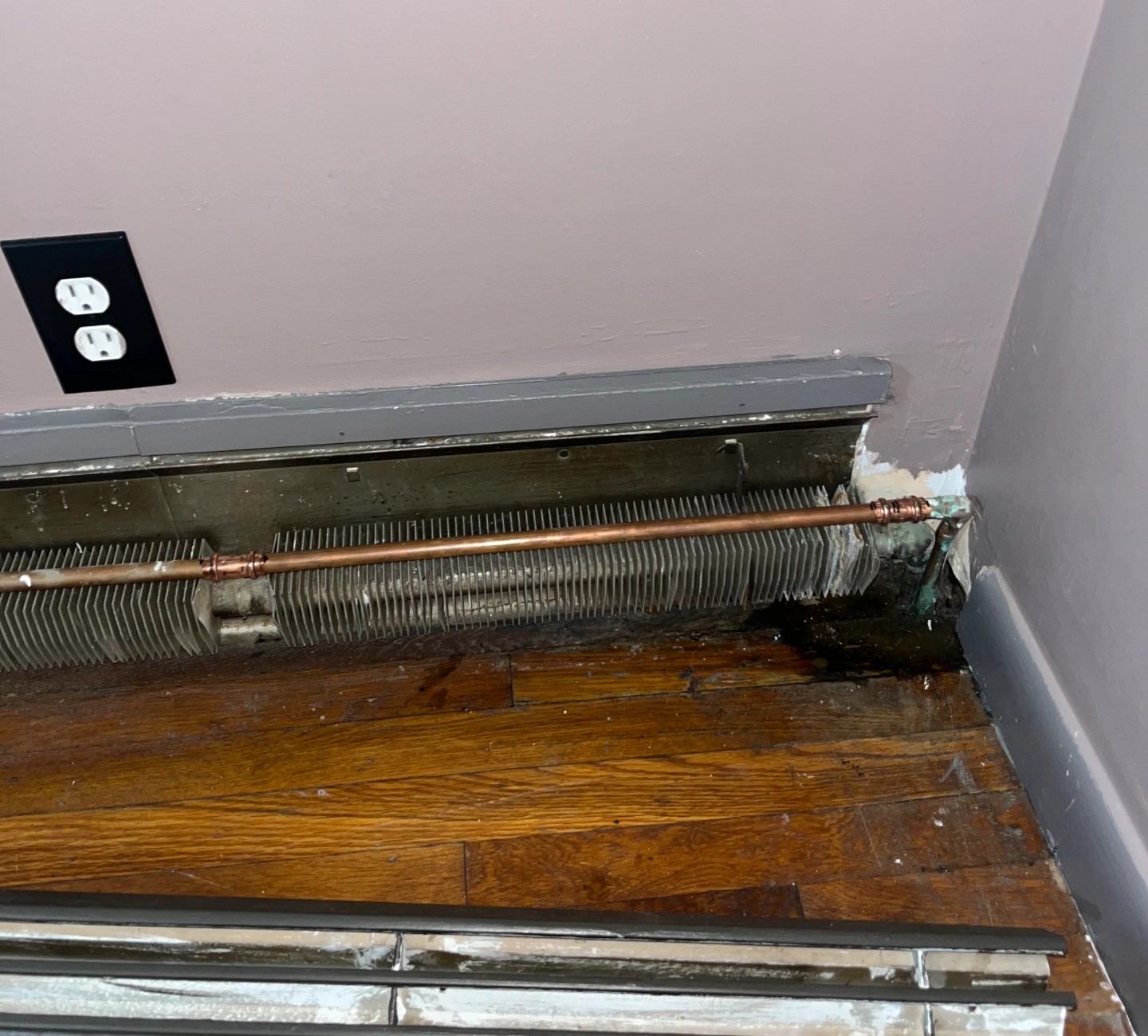
"Adam ran new lines for our heating system and did an amazing job in a timely manner. We will be hiring him for more jobs."
Some failures really are the end. A cracked cast-iron section or a heat exchanger that’s rusted through usually isn’t worth patching. When that’s the case, I’ll show you what failed so you can see it yourself, and you’ll have the facts to decide what’s next. Everything else on that list is a part. If a repair will do it, that’s what I’ll recommend.
When the Heat Goes Out in a Cold Snap
A lost heating system and a frozen pipe are often the same emergency, a few hours apart. In a Central Mass cold snap, a house without heat puts the pipes in outside walls and the basement at risk first, and a burst pipe can do more damage than the heating problem that caused it. If your heat is out and the house is dropping, don’t wait to see if it comes back. If a pipe has already burst, shut off the main water valve and call. Frozen pipe repair is part of what I do, and if the damage goes past the plumbing, I know who to call for cleanup.
Propane and Gas Boilers: Who Should Be Working on Them
In Templeton, a gas-fired boiler means propane. The town isn’t on the state’s list of towns served by a natural gas utility. Over the line in Gardner and Westminster, Unitil supplies natural gas. Either way, some of the parts sit on a line carrying fuel into your house. A loose fitting on a water pipe gets your floor wet. A loose fitting on a gas pipe is a different kind of problem, and a repair can look finished and still not be safe.
When a repair touches the gas side, here’s what should happen before anyone calls it done:
- Every joint that was opened gets leak-tested, not just sniffed.
- The gas pressure reaching the boiler is checked. Too low and it runs poorly. Too high and it can overfire. On propane, that starts at the regulator by the tank.
- The venting is sound and drawing, so exhaust goes outside and not into the basement.
- The shutoff valve near the unit works, so you can turn the gas off if you ever need to.
- The piping is sized for everything it feeds, which matters if a stove or dryer was added to the same line years ago.
In Massachusetts, a licensed plumber can do gas fitting work, and some gas work also needs a permit from the town. Anyone who works on your gas equipment should be able to give you a license number you can look up with the state. A real tradesman won’t mind the question.
Mine aren’t a secret: Master Plumber 17100-PL-M, Journeyman Plumber 34634-PL-J, and Tedstone Plumbing & Heating LLC business license 1310026598-PL-C. It’s my name on them, and on the work.
If your repair needs a trade I don’t cover, I won’t fudge it. I’ll tell you who to call.
What a Repair Visit Looks Like
Finding what broke. A heating system works like a chain. The thermostat calls for heat, power reaches the unit, the burner lights, and the heat moves through water to your rooms. Finding the problem means following that chain until you hit the link that failed. A burner that locks out and a pump that won’t move water both leave you with a cold house, but they’re very different fixes at very different costs. Guessing is how people pay for three parts when one would have done it.
"He took his time and went out of his way to review everything not just the one problem I was experiencing."
Showing you, then pricing it. You’ll see the failed part, not just hear a name for it. You’ll know the price before I start, whether the job is big or small. If it changes, you’ll hear it from me during the job, not on the bill.
What moves the price of a heating repair, no matter who you hire:
- The part. A sensor is small. A circulator pump or gas valve costs more.
- The age of the system. Parts for older boilers can be harder to find and may need ordering, which can mean a second trip.
- Access. A boiler in a tight corner takes longer than one in an open basement.
- Gas work. If the repair touches gas piping, a town permit and inspection may be part of the job.
- What else turns up. A worn part can hide a second problem, like a seeping valve behind it.
Proving the fix. After the part goes in, the system should run a full heating cycle before anyone calls it done. You should see the burner light cleanly and stay lit, the pressure gauge settle where it belongs, the pipes and then the rooms warm up, and no drips at anything that was opened. If something looks off, say so before the work wraps up. That’s the easiest time to deal with it.
Leaving it right. Old parts don’t get left on your basement floor, and new piping doesn’t go in crooked. Straight pipe. Clean threads. I’ll leave it looking better than when I showed up.
"When we needed another heating job done, we specifically called him back again."
Frequently Asked Questions
Can my heating system be repaired, or do I need a new one?
Most heating failures come down to one worn part, like a circulator pump, zone valve, or expansion tank, and those are repairable. Replacement usually only makes sense when something like a cracked cast-iron section or a rusted-through heat exchanger is involved, since those can’t really be patched. Either way, you should see the failed part before you decide anything.
My boiler’s reset button keeps popping. Should I keep pressing it?
No. The red reset button on an oil burner isn’t the problem. It’s a signal that something else failed. Pressing it over and over can turn a simple fix into a bigger repair, so leave it alone and call.
Why is the pressure relief valve on my boiler dripping?
Either the valve is worn out or the system pressure is too high, and both need attention. A failing fill valve or a waterlogged expansion tank are common reasons the pressure climbs. It’s a safety part, so never cap or plug it to stop the drip.
Find Out What Failed Before Anyone Talks About Replacing It
Call me. I’ll trace the problem to the part that quit, show it to you, and give you the price before I start, so you’re deciding with facts, not with a cold house and a sales pitch. See all of Tedstone’s plumbing and heating services in Templeton.